
On paper, the Canada project was one customer, one home and one consolidated shipment.
At our warehouse, it arrived roughly 15 to 16 times over about 60 days.
The purchases came from Alibaba, Taobao, 1688, factories around Foshan and physical stores. There were sofas, beds, tables, cabinets and rugs, but also bowls, plates, chopsticks, cookware, towels and other things the customer expected to use every day at home. A sofa and a box of tableware belonged to the same household project, but they were not the same receiving or packing problem.
The final file contained 607 items, 171 declared lines and 134 product names from more than 30 suppliers. Those numbers matter because they show why a consolidation warehouse cannot be only a place where boxes wait. For nearly two months, we needed the space and the records to receive each arrival, identify it and keep it connected to the right project until the last supplier was ready.
The first group was completed on May 25. The second group was not completed until June 17, a difference of 23 days. The container was loaded on June 22. “One shipment” was the result at the end; it was not the condition in which the goods reached us.
Once everything was in the warehouse, the work changed from collecting to reorganising. We separated the cargo by fragility, surface, shape, declaration identity, inspection access and final packed dimensions. That is where consolidation becomes a craft rather than a storage service.
Bowls and plates cannot simply be poured into a bigger carton. Each piece needs separation and cushioning—such as non-abrasive paper, foam or bubble material—with dividers and the empty spaces filled so the pieces cannot knock against one another. Chopsticks, cutlery and other small pieces need their own inner bags or small cartons so they do not migrate through a mixed package and become impossible to count.
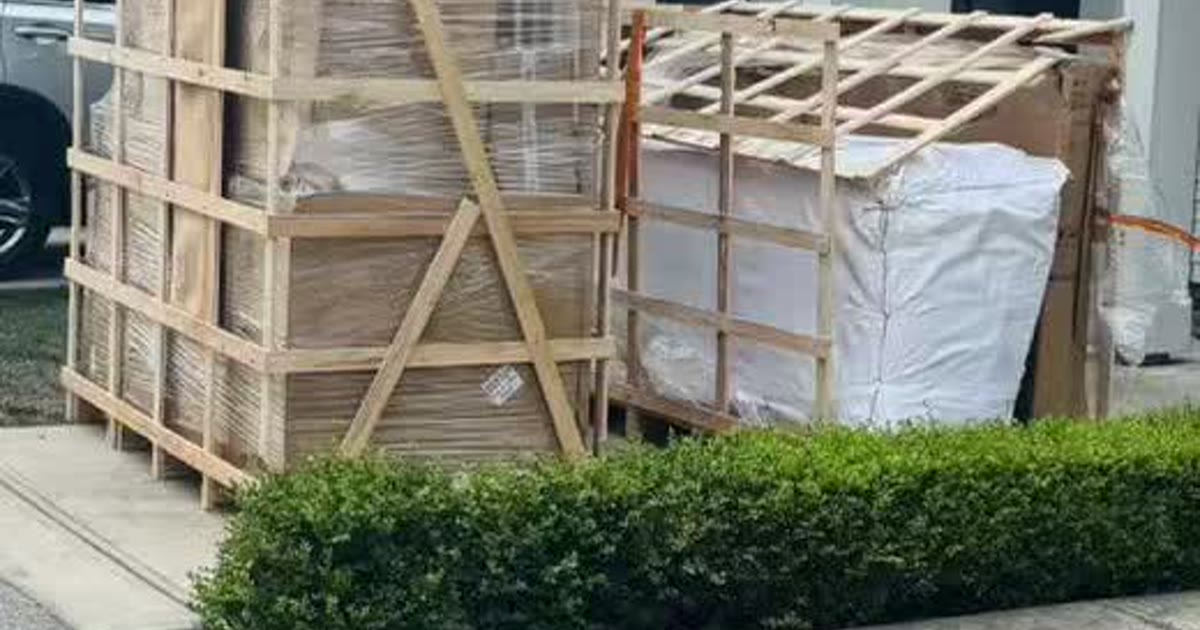
Durable products do not automatically need the same treatment. Some can keep a good factory carton with edge protection and film. A product with a strong structure but a surface that needs protection may only need a timber frame rather than a fully enclosed wooden case. That can reduce timber, weight and volume while still giving the forklift a clear structure to handle.
Customs access creates another packing decision. Physically combining products into one outer case does not mean they can be turned into one vague customs description. The internal list still needs to show what is inside. For goods that may need to be viewed or verified, we can keep labels visible and use an open-sided or removable-panel timber structure so an inspection does not require destroying the whole package. The purpose is to make a lawful inspection easier, not to hide mixed goods.
Then we worked backwards from the final delivery. A tightly packed case can save a few tenths of a cubic metre and still be a bad result if one side becomes too long or too wide for the planned truck or tail-lift operation. So the longest side, width, total weight and lifting method had to be considered before the case was closed. There is no universal safe dimension here—the route, vehicle, packing and unloading equipment decide it.
Saving freight is not the same as making every package as small as possible. The better goal is to group compatible goods, remove avoidable voids, protect fragile edges, keep inspection access where needed and avoid creating an oversized package that makes the last mile more expensive. Sometimes a carton is right. Sometimes it is a timber frame. Sometimes it has to be a closed case.
The container was loaded on June 22, reached Vancouver on July 22, cleared customs on July 28 and completed residential delivery on August 16. The customer confirmed that the goods arrived safely and that the wooden packing structure was firm.
What the customer finally saw was one delivery. What made that possible was about 60 days of patience, 15 or 16 separate receipts, and dozens of small packaging decisions that never appear in the phrase “warehouse consolidation.”
What the customer finally saw was one delivery. What made it possible was about 60 days of patience and dozens of small decisions.