

The seven planning stages.
- Supplier readiness: each factory confirms what is finished and when.
- Warehouse receipt: packages arrive and agreed receiving facts are recorded.
- Packing and measurement: corrections, final dimensions and gross weight are confirmed.
- Booking and loading: route, space, cut-off and loading plan are confirmed.
- International movement: departure and carrier events are monitored.
- Customs: the destination team handles the agreed clearance scope.
- Final delivery: appointment, vehicle access, unloading and handover are coordinated.
Three completed timelines.
These are dated operating records from completed home-project shipments: U.S. furniture, a Canada whole household and Spain doors and windows. They show how the milestones were documented; they are not transit-time promises for another shipment.
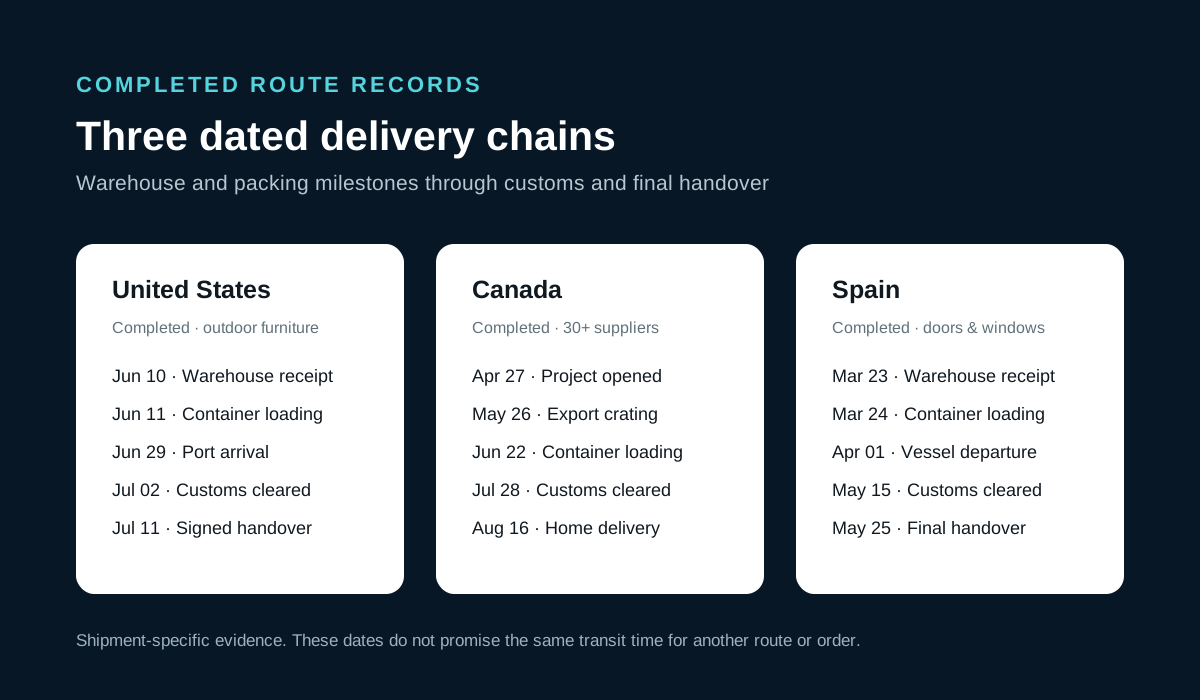
United States · completed
- Dated warehouse-status and visible-condition update; the page shows a May 18 intake time.
- Container loading.
- Destination-port arrival.
- Customs clearance completed.
- Customer handover recorded by signed receipt.
Canada · completed
- Whole-household project with orders from more than 30 suppliers opened.
- First group of goods completed.
- Export crating completed.
- Second group of goods completed.
- Container loading.
- Arrival at Vancouver port.
- Customs clearance completed.
- Residential delivery completed.
Spain · completed through Rotterdam
- Warehouse receipt.
- Container loading.
- Vessel departure.
- Arrival at Rotterdam.
- Customs clearance completed.
- Final customer handover in Spain.
Where to add buffer.
Allow time around factory holidays, peak-season space, supplier slippage, packing corrections, export cut-offs, transshipment, inspections and local appointment availability. The buffer should reflect the project deadline and route, not a generic website number. Critical installation dates should be separated from the optimistic arrival estimate.
Milestone updates should follow evidence.
| Milestone | Useful visible record |
|---|---|
| Warehouse receipt | Reference, count, outer condition and receipt time |
| Packing | Problem photo, decision, corrected packing and final dimensions |
| Loading | Loading image or video and equipment or seal reference where applicable |
| Transit | Carrier or route milestone available for that service |
| Delivery | Appointment, handover or signed receipt where available |
Not every service generates every record. The promised update set belongs in the written service plan.
When something changes.
One responsible contact should state what is known, likely timing or cost impact, and practical options. A supplier may be waited for or split into another shipment. A packing issue may be corrected before loading. A carrier delay may require a revised milestone. Buildcargo promises earlier warnings and documented choices—not zero delay.
The active U.S. case shows after-hours repacking and continued coordination without presenting the project as a completed delivery.
Inspection holds need evidence, not promises.
One shipment-specific record below preserves the carrier status HELD. A later tracking record shows the shipment moving through the destination network. Ethan confirms that the shipment was inspected and subsequently released; the later tracking screen is supporting progress evidence, not a formal customs-release notice.
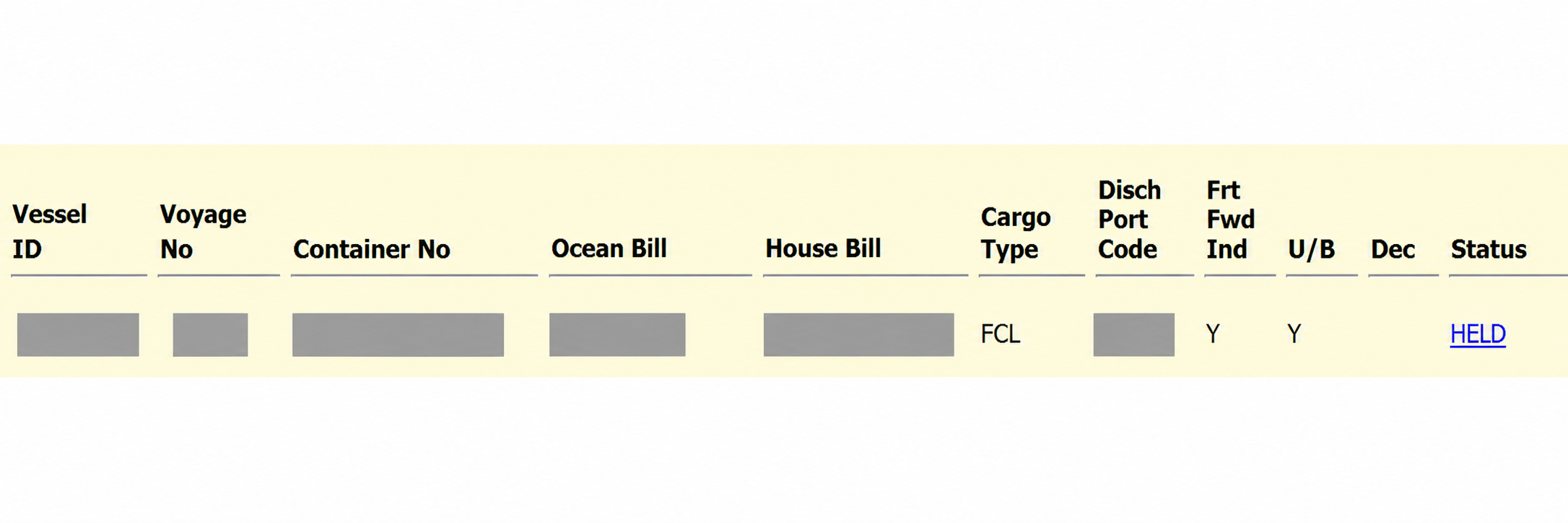 Carrier status recorded: HELD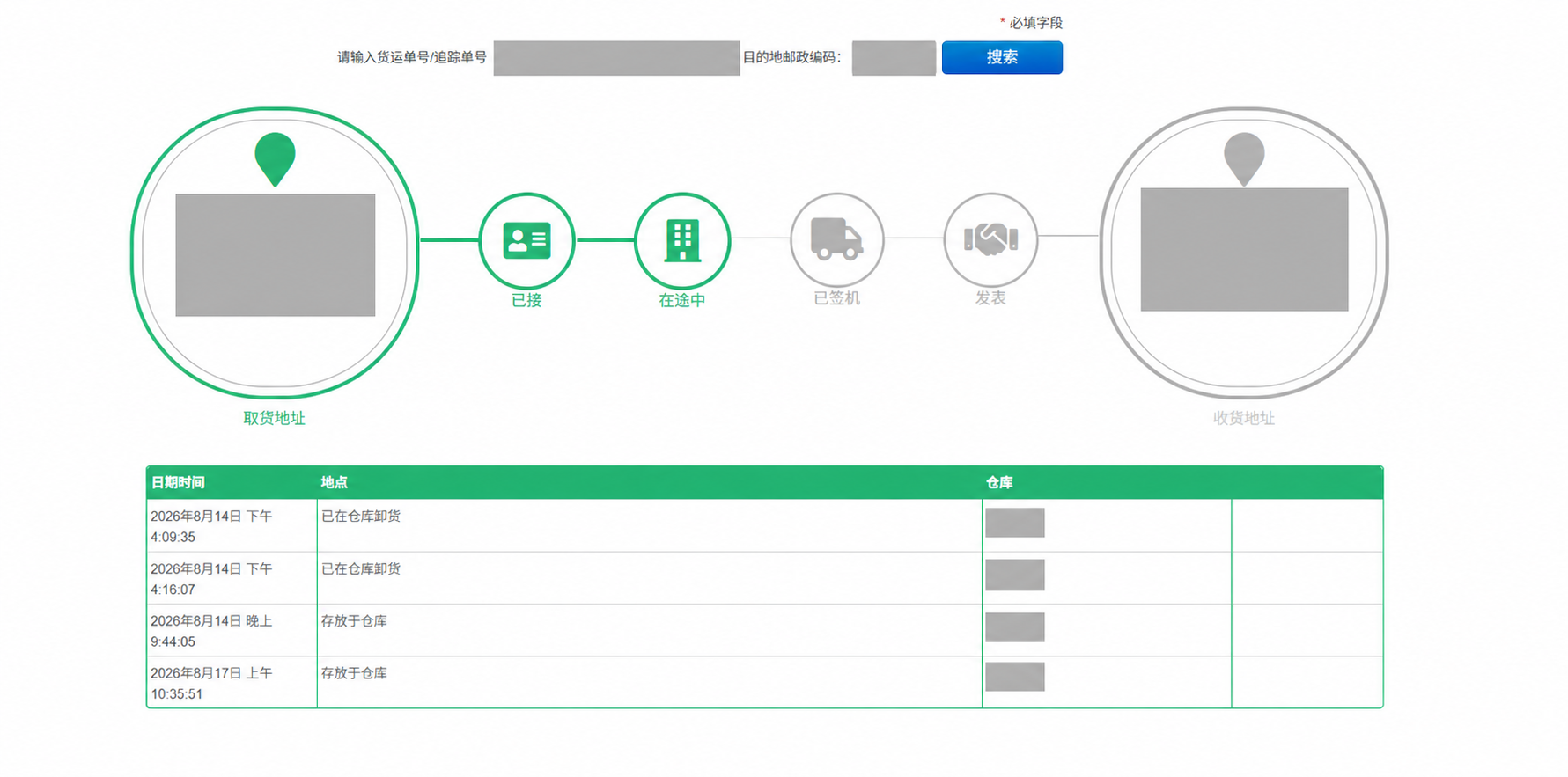
This proves: a real shipment entered a held state and later continued through the delivery network after an owner-confirmed inspection and release. It does not prove: why the inspection occurred, that every inspection follows the same timing, or that carrier and customs delays can be eliminated.
Rate validity belongs to the timeline.
Buildcargo’s standard freight quotation is valid for three days because ocean rates, fuel, capacity, peak-season charges, exchange rates and route availability can change. If the quote expires or the cargo facts change, the revised impact is confirmed in a new written quotation before booking.
Current U.S. and Europe lanes have recurring operating frequency, but the vessel, cut-off and sailing date remain shipment-specific. A recurring route is not a fixed transit-time guarantee.
What to send for a realistic timeline.
- Supplier list and expected ready date for each order.
- Product and packing status.
- Target arrival or installation date.
- Destination postcode and access conditions.
- Which items are urgent and whether split shipping is acceptable.